

“I wish I’d started saving earlier…”
Ask most baby boomers about their most significant financial regret, and this one often tops the list. When you’re in your twenties, retirement feels like a lifetime away. Between student loans, high living costs, and uncertain job markets, investing may not seem like a priority.
But delaying could be an expensive mistake. The reason? The incredible power of compound interest.
What Is Compound Interest?
Compound interest means you earn interest not only on your initial investment (the principal) but also on the interest that investment generates over time.
Example:
- Start with $100.
- Earn 10% interest → $110 after one year.
- Year two → $121.
Over decades, this snowball effect can transform modest contributions into significant wealth. (Of course, compounding works against you, too—think credit card debt left unpaid.)
Compounding in Action: A Tale of Two Investors
The most significant factor in compounding is time.
- Becky: Starts saving $1,000 annually at age 20.
- Brian: Delays until age 30, then invests $1,000 annually.
- Both earn 7% interest and contribute for 25 years ($25,000 each).
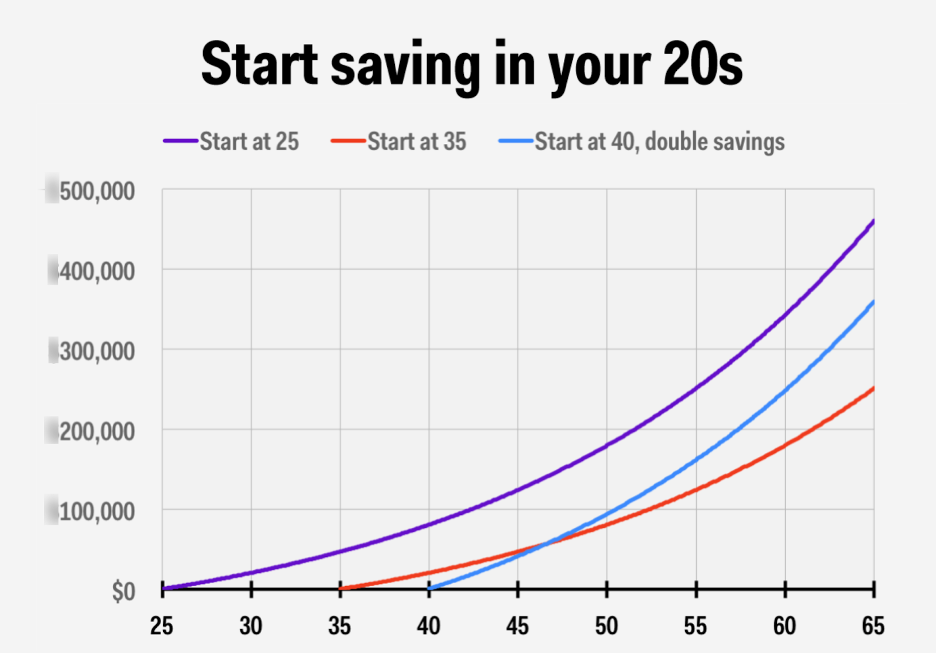
By retirement at 65, Becky’s portfolio is worth nearly twice as much as Brian’s—even though they invested the same amount. Her decade-long head start allowed compound interest to keep working long after she stopped contributing.
What If You Start Late?
If you didn’t start early, it’s not too late. An old saying applies: “The best time to plant a tree was 20 years ago. The second-best time is now.”
While starting later reduces the total benefit of compounding, consistent investing still yields a significant return. The key is to stay invested.
Investors who resisted the urge to sell during downturns—such as the 2008 financial crisis or the 2020 pandemic—often came out ahead in the long term. Compounding rewards patience and consistency, not perfect timing.
The Bottom Line
Compound interest is as close to “free money” as you’ll ever find in finance. The earlier you start, the more powerful it becomes. However, even late starters can benefit by staying disciplined, remaining invested, and allowing time to do the heavy lifting.
Whether you’re 25 or 55, the principle remains the same: invest consistently, think long term, and allow compounding to grow your wealth.